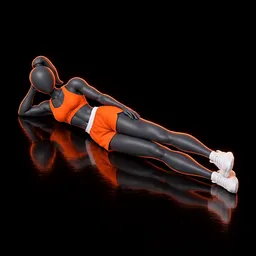



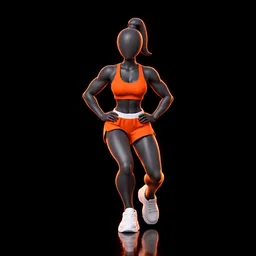
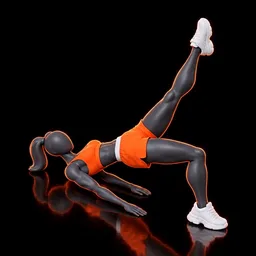
A glute workout at home does not need weights. The Glute Builder is a bodyweight circuit that lifts, shapes and strengthens your hips and butt. It takes 21 minutes at intermediate level, burns about about 76 kcal for a 70 kg (154 lb) person, and needs no equipment, just floor space.
Who this glute workout is for
This circuit suits anyone who wants a simple booty workout at home without gear. It works for first-timers because the level switch gives beginners fewer reps, shorter work and longer rests. It also works for experienced exercisers, since the advanced level does the opposite and asks for more.
It is a good fit if you sit a lot and want to wake up your hips, or if you want a short leg day that is easy on space. If a move clashes with an injury, the app can swap it for one that fits. If something hurts (sharp pain, not just muscle effort), stop and choose a gentler option.
Calorie numbers are estimates. For your own body weight, try the Calories Burned Calculator for Home Workouts.
How to do the workout
The full workout is shown above. Beginner takes about 20 minutes, intermediate 21 minutes, and advanced about 24 minutes.
- Warm up. Do Hip Circles and Leg Swings. Move smoothly and gradually make the range bigger. You should feel warm and loose in the hips, not rushed.
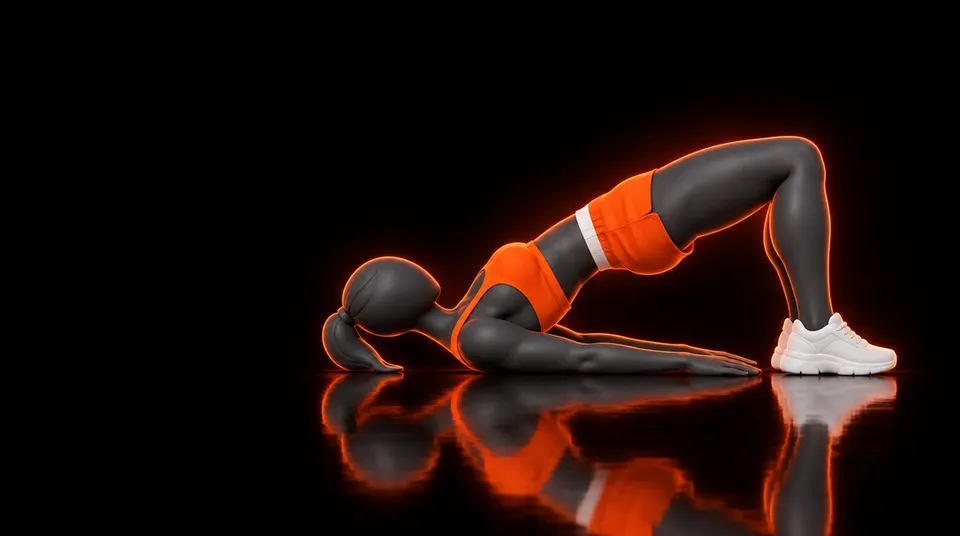
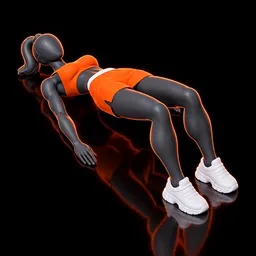
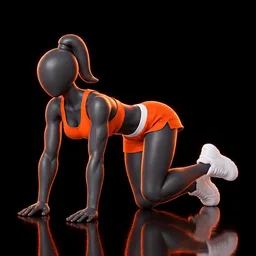
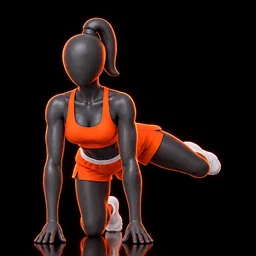
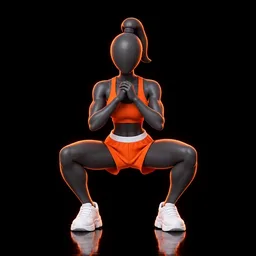
- Round 1. Do each move in order: Glute Bridges (15 reps), Donkey Kicks (12 per side), Fire Hydrants (12 per side), Sumo Squats (15 reps), Curtsy Lunges (10 per side) and Single-Leg Glute Bridges (10 per side).
- Rest. Take 20 seconds after each move at intermediate level. Beginners rest longer, advanced exercisers shorter.
- Round 2. After a slightly longer break between rounds, repeat the whole list. Keep your form as clean as in round one.
- Cool down. Finish with the Figure-4 Stretch and the Pigeon Stretch. Breathe slowly and never push into pain.
The exercises and what each one does
Warm-up
Hip Circles loosen the hip joint in all directions. Leg Swings open up the hips and hamstrings so the main moves feel smoother. If your hips feel stiff in general, add some Hip Openers.
Main circuit
- Glute Bridges: lie on your back, feet flat, and press through your heels to lift your hips. It teaches you to feel your glutes working. Squeeze at the top without arching your lower back.
- Donkey Kicks: from hands and knees, lift one bent leg toward the ceiling. It targets the glute max. Keep your hips square and your ribs still.
- Fire Hydrants: from hands and knees, lift one bent knee out to the side. It works the side of the hip, including the glute medius, which helps keep your pelvis steady.
- Sumo Squats: a wide stance with toes turned out. Sit down between your hips and stand up by pushing the floor away. Inner thighs and glutes share the load.
- Curtsy Lunges: step one leg back and across behind you, then return. The crossing angle challenges the outer glute and balance.
- Single-Leg Glute Bridges: a bridge with one foot lifted. It asks each side to work alone and shows any imbalance between sides.
Cool-down
The Figure-4 Stretch (how to do it) and Pigeon Stretch ease the hips and outer glutes after work. Stay relaxed and breathe.
If you want a live check on your depth and form, Homie Fit offers a camera-based form check on the exercises that support it, running on your phone only.
How to make it easier or harder
Easier
- Use the beginner level: fewer reps, shorter work and longer rests.
- Do one round, then add the second when you feel ready.
- Make lunges smaller, or hold a wall or chair for balance.
- Swap single-leg bridges for regular bridges.
Harder
- Use the advanced level for more reps and shorter rests.
- Slow the lowering part of each rep to about 3 seconds.
- Pause for 2 seconds at the top of every bridge.
- Add a backpack with books for squats and bridges, held securely.
- Move toward harder variations such as the Single-Leg Hip Thrust or Single-Leg Deadlift.
How often to do it and how to progress
A reasonable start is 2 to 3 glute sessions a week with at least one rest day between them. Muscles get stronger while you recover, so rest is part of the plan, not a failure.
Here is a simple way to progress over several weeks:
- Weeks 1 to 2: learn the moves at the beginner or intermediate level. Focus on feeling the glutes, not on speed.
- Weeks 3 to 4: if every set feels easy, do the next level up or slow your tempo.
- After that: add pauses, small loads or one-leg versions. Change one thing at a time.
Progress is not only about reps. Better balance, steadier hips and easier stairs all count. Walking is also good for your glutes, especially uphill or on stairs, but bodyweight strength moves give them a stronger push than an easy stroll.
What about the 888 rule and growing your glutes fast?
The “888 rule” is a popular social media idea of 8 moves, 8 reps and 8 minutes. It is not an official standard, and this circuit does not depend on it. For muscle, a more dependable approach is steady training: a challenging effort close to the end of each set, enough rest, regular meals with enough protein, and patience. No workout can promise a particular shape or speed of change.
Why glute bridges are worth doing
Glute bridges teach hip extension, which is the motion behind standing up, climbing stairs and walking. They are easy on the knees and beginner-friendly. When bridges get easy, try the Hip Thrust with your upper back on a couch.
Common mistakes
- Arching the lower back in bridges and kicks. Keep your ribs down and tighten your belly lightly. Lift only as high as you can control.
- Swinging the leg in donkey kicks and hydrants. Slow, small and steady beats big and fast.
- Letting knees cave in during squats and lunges. Push your knees toward your pinky toes.
- Rushing through reps. Speed takes work away from the glutes. Count a slow 2 up and 2 down.
- Skipping the warm-up. Two minutes of hip circles and swings make the first set feel better.
- Training the same muscles hard every day. Give them a rest day between sessions.
- Expecting fat loss from the butt only. Exercise builds the muscle underneath, but it cannot choose where your body burns fat.
Add variety between sessions
Once the circuit feels familiar, swap in new moves on some days: Frog Pumps, Clamshells or Banded Side Steps if you own a band. For a broader plan, see the home workout for women page.
To keep track of sessions, Homie Fit has a calendar and streaks that rest days do not break, which suits a 2 to 3 day weekly routine.