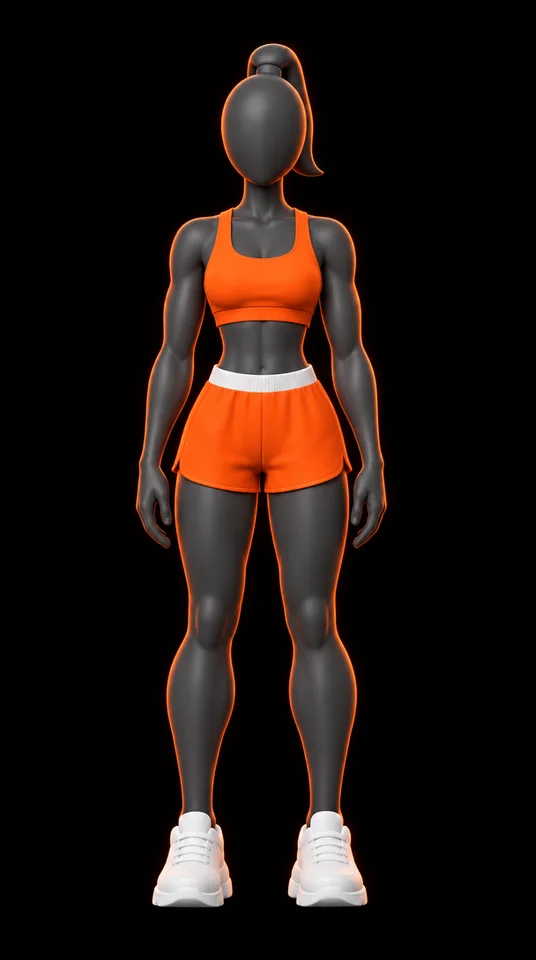
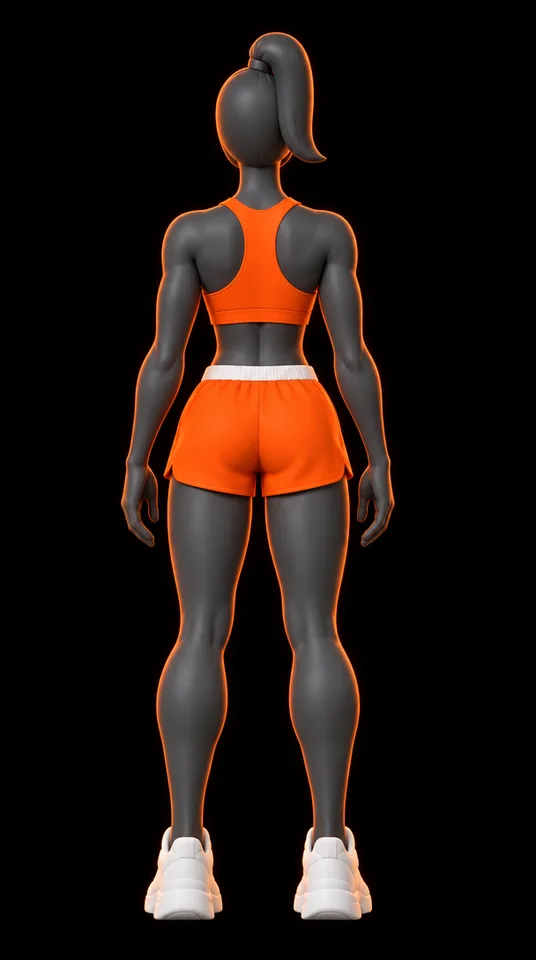
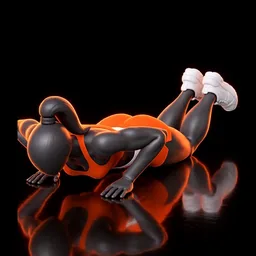
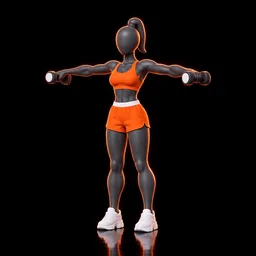
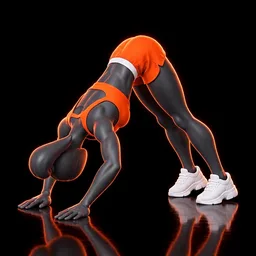
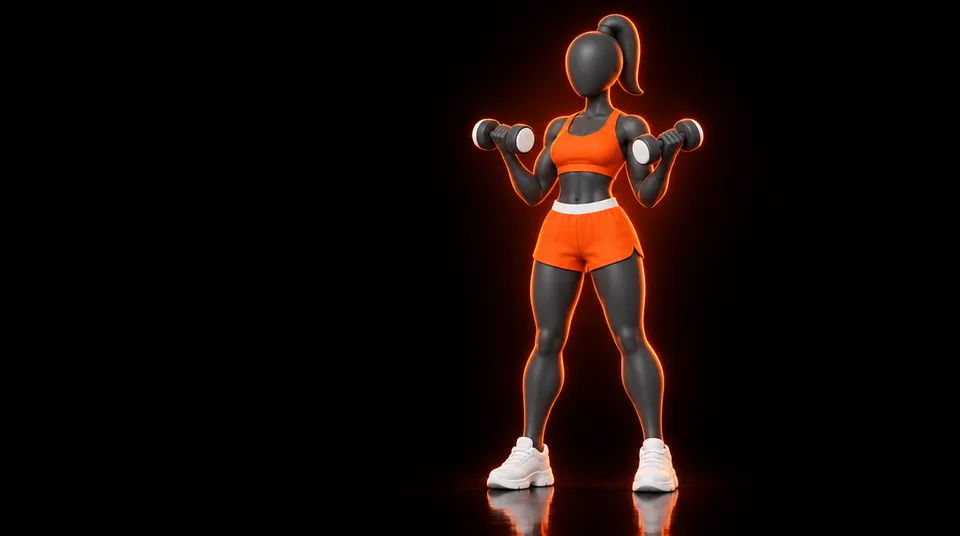
The dumbbell shoulder press is a strength exercise where you press two dumbbells from shoulder height to straight arms overhead. It mainly trains your shoulders, with help from your arms. It suits intermediate home exercisers with dumbbells, and beginners can scale it down. You can do it standing or seated, as a seated dumbbell shoulder press.
How to do the dumbbell shoulder press
You need a pair of dumbbells you can control for the full set. If you are unsure, start lighter than you think you need. Form comes first, weight second.
- Set your stance. Stand with feet about hip-width apart, or sit tall on a bench or sturdy chair with your back supported and feet flat on the floor. Keep your knees soft if you stand.
- Hold the dumbbells at shoulder height. Palms face forward, elbows point down and slightly forward, and the weights sit just above your shoulders.
- Brace your core. Squeeze your abs and glutes lightly, as if someone might tap your stomach. This keeps your lower back from arching.
- Press overhead. Push both dumbbells straight up together until your arms are straight. Keep your ribs down and your head neutral.
- Lower with control. Bring the dumbbells back to shoulder height slowly, without letting them drop or drift out wide.
Keep the dumbbells within your own frame, so that if someone filmed you from the front, the weights would stay in view the whole time. Both arms move together, and you do not need to jump, bounce, or use your legs to get the weights up.
Standing or seated?
Standing asks your core and legs to stabilize you, which makes it harder to keep your back from arching. Seated with back support takes some of that load away, so it is a good choice when you want to focus on your shoulders or you feel wobbly. Both versions use the same press path and the same steps above.
Muscles worked
The main target is your shoulders (the deltoids), especially the front and middle parts. Your arms help: the back of your upper arm (triceps) straightens your elbows at the top. Your core and upper back work quietly to keep your torso steady, particularly when you stand.
Because shoulders are the main job here, this move pairs well with lateral raises, which train the side of the shoulder more directly. See Lateral Raises for form and reps.
Common mistakes and how to fix them
Arching your lower back
This is the most common one. As the weights go up, the ribs flare and the lower back curves. Brace your core, tuck your ribs down, and squeeze your glutes. If you still arch, the weights are probably too heavy, so go lighter or sit with back support.
Pressing in front of you
If the dumbbells drift forward, you are turning the press into something else. Aim to press straight up, with your wrists stacked over your elbows and your biceps close to your ears at the top.
Letting the elbows flare too wide
Elbows pointing straight out to the sides can feel cranky on the shoulders. Angle your elbows slightly forward, so your arms sit in front of your body rather than in line with it.
Rushing the lowering phase
Dropping the weights wastes the best part of the rep. Take a couple of seconds to lower, and stop at shoulder height.
Uneven pressing
One dumbbell racing ahead of the other usually means one side is weaker. Slow down, keep both moving together, and lower the weight if you cannot match them.
Shrugging up toward your ears
Tight, hiked shoulders make the press feel pinchy. Before each rep, gently draw your shoulders down and away from your ears.
Warm up first
Shoulders like a few minutes of preparation. Try Arm Circles and Shoulder Rolls, then a few light reps with very light weights before you pick up your working pair.
Easier and harder variations
Easier options
If the press feels too hard, or you want to build up to it, try one of these:
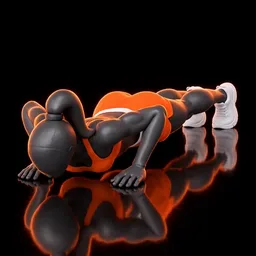
- Knee Push-Ups: a gentler pressing move that uses your body weight.
- Arm Pulses: small, controlled arm movements that build shoulder endurance.
- Lateral Raises: a lighter shoulder move that teaches control with less load.
Harder options
When the press feels solid and your form stays clean, you can progress to:
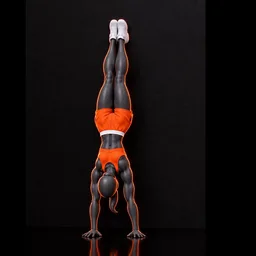
- Wall Handstand Hold: a bodyweight overhead hold that challenges your shoulders in a new way.
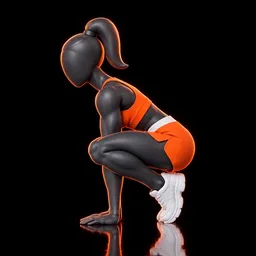
- Crow Pose: a balance and arm-support challenge that asks for strength and focus.
Similar moves that train the same area include Pike Push-Ups, Push-Ups, and Plank Shoulder Taps.
Sets and reps
In the app, the standard set at intermediate level is 10 reps. Beginners get about a quarter less than that, and advanced exercisers get about a third more.
As a general starting point, many people do 2 to 3 sets, resting 30 to 60 seconds between sets (a bit longer if you are using heavier weights). Here is a simple way to think about it:
| Level | Starting point |
|---|---|
| Beginner | About a quarter fewer than 10 reps, 2 sets |
| Intermediate | 10 reps, 2 to 3 sets |
| Advanced | About a third more than 10 reps, 3 sets |
Choose a weight that lets you finish the last rep with good form and one or two reps in reserve. When it feels easy, add a few reps first, then a bit more weight.
How many calories does it burn?
For a 70 kg (154 lb) person, 10 minutes of work is about about 49 kcal (MET 4). Your own number will differ, and you can estimate it with the Calories Burned Calculator. Remember that working your shoulders does not burn fat from your shoulders specifically; it simply adds to your overall training.
Who should modify or skip it
If you have shoulder problems, this is not the move to push through. The Homie Fit app swaps it for a safer option when someone reports shoulder issues, and you can do the same: choose a gentler alternative such as the easier options above, or check with a healthcare professional first.
Stop if you feel sharp pain, pinching at the front of the shoulder, or tingling in your arms. Mild muscle fatigue is normal, but pain is a signal to put the weights down.
If you are brand new to strength training, start with the lower beginner volume and a light pair of dumbbells.
Check your form and plan your week
If you want feedback while you train, the live AI form check in Homie Fit is available for this exercise. The camera counts your reps and checks your form, and it all runs on your device. For a full routine, the shoulder workout at home gives you a place to use the press, and the Dumbbell Arms workout at /workouts/dumbbell-arm-workout includes it too.
Once the straight press feels comfortable, you could also try the Arnold Press, which adds a rotation to the movement.